September 18, 2026
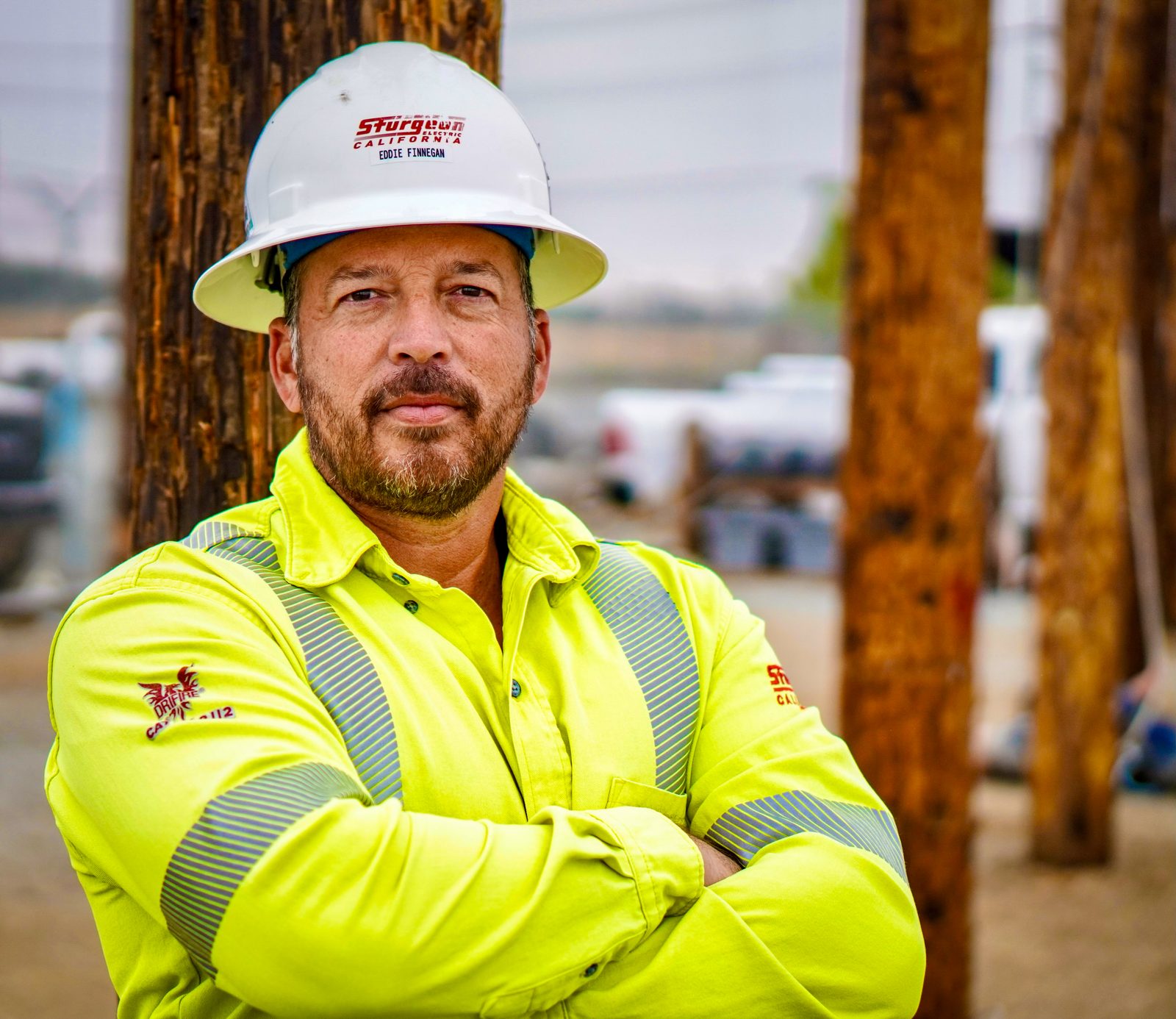
Day in the Life: Edward Finnegan, Regional Safety Manager at Sturgeon Electric California
Edward Finnegan is driven by teamwork.
From his service in the Marine Corps to his current role as regional safety manager at Sturgeon Electric California (Sturgeon California), Eddie, as he’s better known, shows up for his comrades and expects the same in return. Lucky for him, that’s exactly the kind of culture he’s found – and helps fortify – in his three-and-a-half years at Sturgeon California.
From boots on the ground supporting lineworkers in the field to his work behind the scenes establishing the MYR Group SkillBridge program and Veteran Employee Resource Group to help veteran employees transition into the workforce, Eddie’s mission is to strengthen and empower his team.
Read on to learn about how Eddie brings accountability, leadership, and a team-first mentality to his role.
What brought you to the electrical construction industry?
I fell into a SkillBridge program that helps veterans in their last 180 days of service shadow field construction advisors and safety professionals. My mentors told me it was an easy fit for a Marine who is used to rules, procedures, policies, and a team mentality, so the shift felt natural. I shadowed at a utility company that ended up hiring me. I worked on solar projects in Arkansas and Alabama, acclimating to the industry. After that I landed here at Sturgeon Electric California.
What does a day in your role look like?
Every day is different. Every day brings challenges and rewards.
Currently I’m the regional manager for Sturgeon Electric California, but my region spans California, Nevada, Utah, Wyoming, and Idaho. A day in my life changes from week to week and state to state.
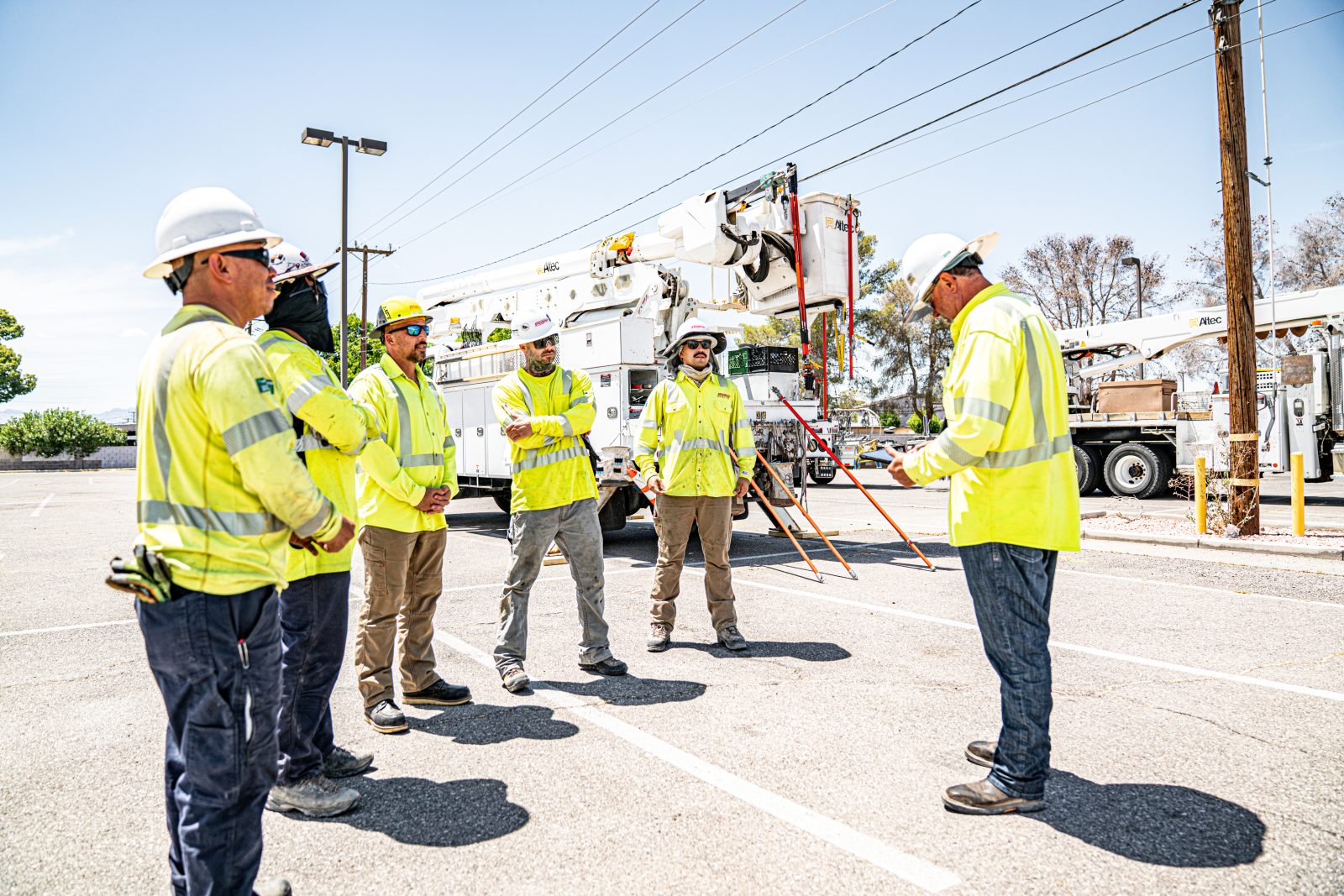
My team and I all work to get tied in with operations and see where we can add the most value. Whether it’s a high risk task or high potential-of-risk job, we try to put ourselves at the potential point of friction and help that job site or task run like a well-oiled machine.
I have five guys that report to me. It’s a mix between trades trainers and safety professionals scattered throughout the area. They all travel for me. They all take care of business. Honestly, they make it easy for me by their willingness to travel and spread the culture across every part of this region.
How big of a role does culture play in keeping crews safe?
I think that’s probably the number one priority. I like to say I have two tasks: employee welfare and mission accomplishment. Both of those feed the culture that we’re trying to build.
That’s one of the things we talk about all the time: how leadership can be a driving force behind a safety culture. It comes from the frontline individuals being bought into what we’re trying to do. We have to set expectations right up front that feed into the culture.
We work to enforce the idea that everyone leads. Everybody’s got a responsibility to lead, ask the right questions, be involved. Every day there’s an opportunity to reinforce our culture, our standards, the way we do business, and hopefully over the years it just gets better.
It comes down to showing up every day, putting in the work, and reminding the guys it’s a team effort. We need them to get out there and do the job and we want to support them in that effort.
Leadership is crucial to this. We can throw tools and policies, procedures, manuals, and workshops at everyone, but the truth is we need leaders to enforce them to get the job done safely. It’s fundamental to what we do. It’s why we have the culture that we have. We have a low incident rate and low potential serious injury rate, and it’s really because the leaders – the guys that are willing to hold the standard that we set – take that out to the field.
What do you find to be the most gratifying part of your job?
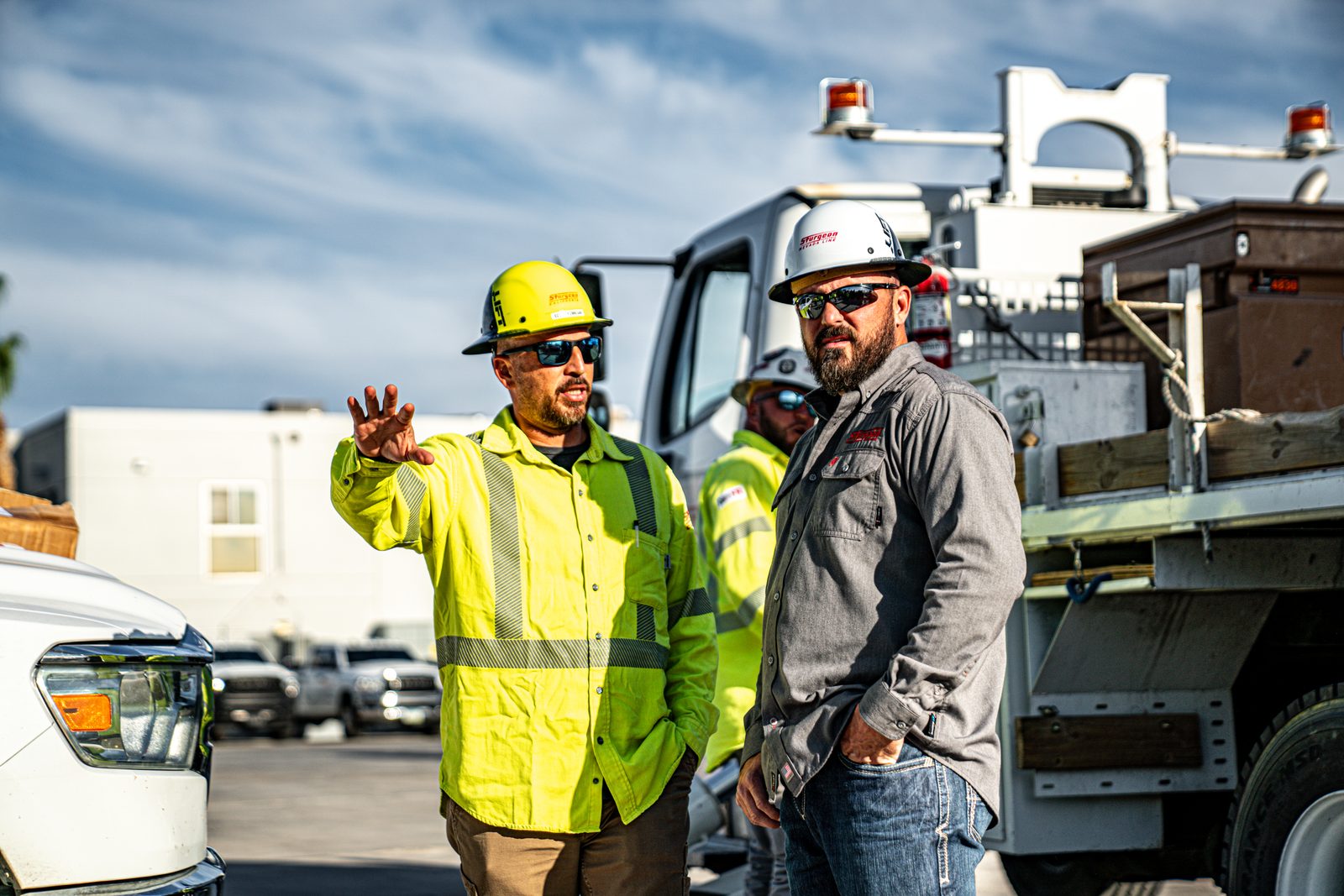
I support the frontline workers, which are the linemen. So for me, the most gratifying thing is the ability to tie in with the crews. We’ve built a culture where ops and safety are aligned, and that is crucial. That’s what makes my job worthwhile: I stand adjacent to these guys that are powering the grid, and I enjoy being part of that team effort.
Our mission is powering people’s homes, hospitals, air conditioning, all these things that the trade provides. It’s worthwhile because we are helping the community, we’re building the community, we’re reinforcing resiliency in the grid. Whetherit was serving my country or coaching youth sports, it feels good to give back. I’m not the one physically building the powerline, but I’m supporting the guys that are. The ability for us to give back and really provide a crucial element to society is one-of-a-kind.
What are some words that you live by or guide you in what you do?
Here at Sturgeon Electric California, we say everyone leads, and that means everybody has a voice. It doesn’t matter if you’re an apprentice or a groundman, there are always opportunities to lead, whether it’s in the field, in the office, or during a safety meeting.
How have you experienced mentorship at Sturgeon California?
I feel like my mentorship is always found at the end of a fire hose around here. There’s so much to learn. I’m often mentored by my direct reports. I have a groundman who’s been doing this for over 15 years. He knows so much about the trade, and we’ve built a culture where we can go back and forth and he helps me just as much as I help him. So the mentorship comes from all levels, both up and down our chain of command.
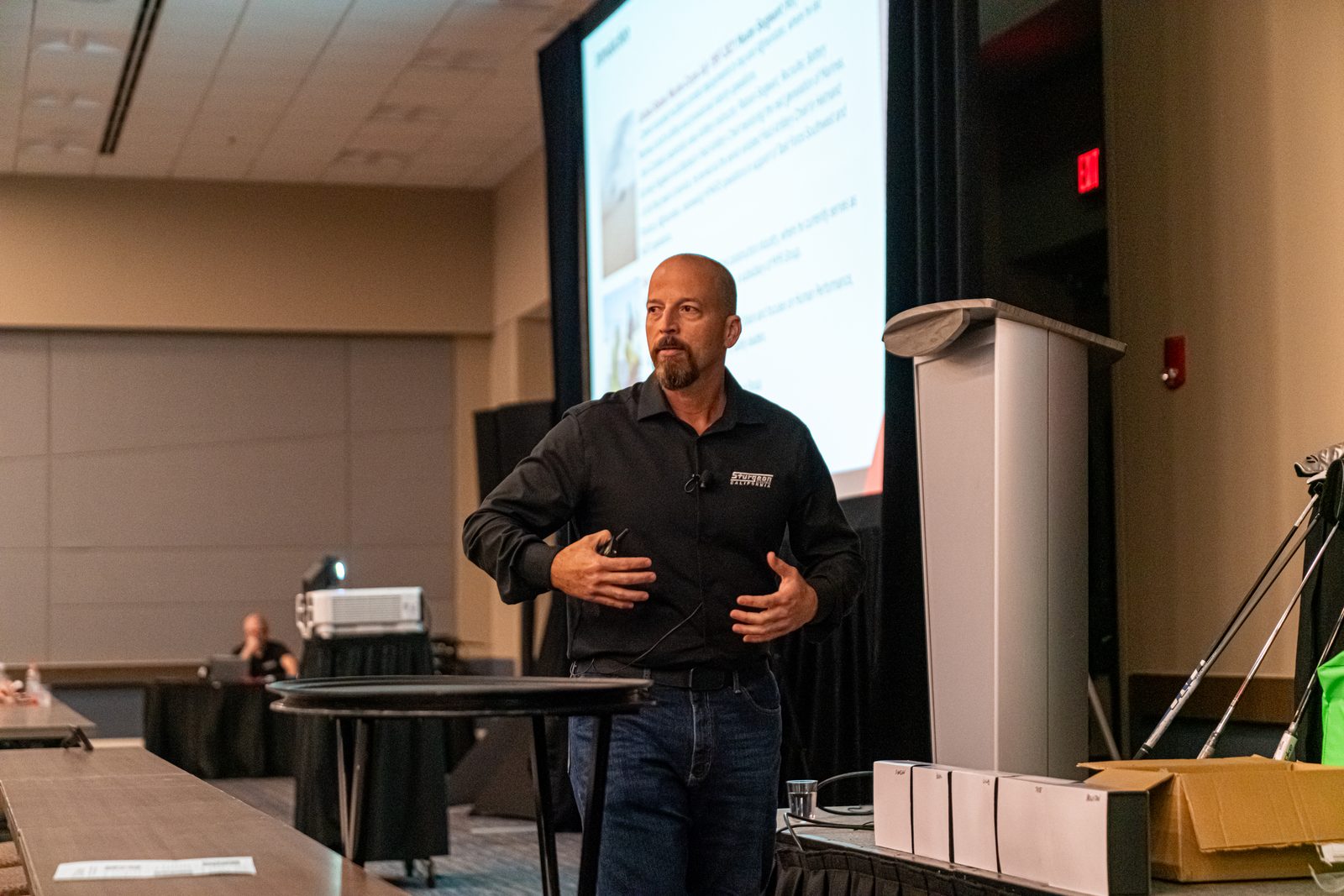
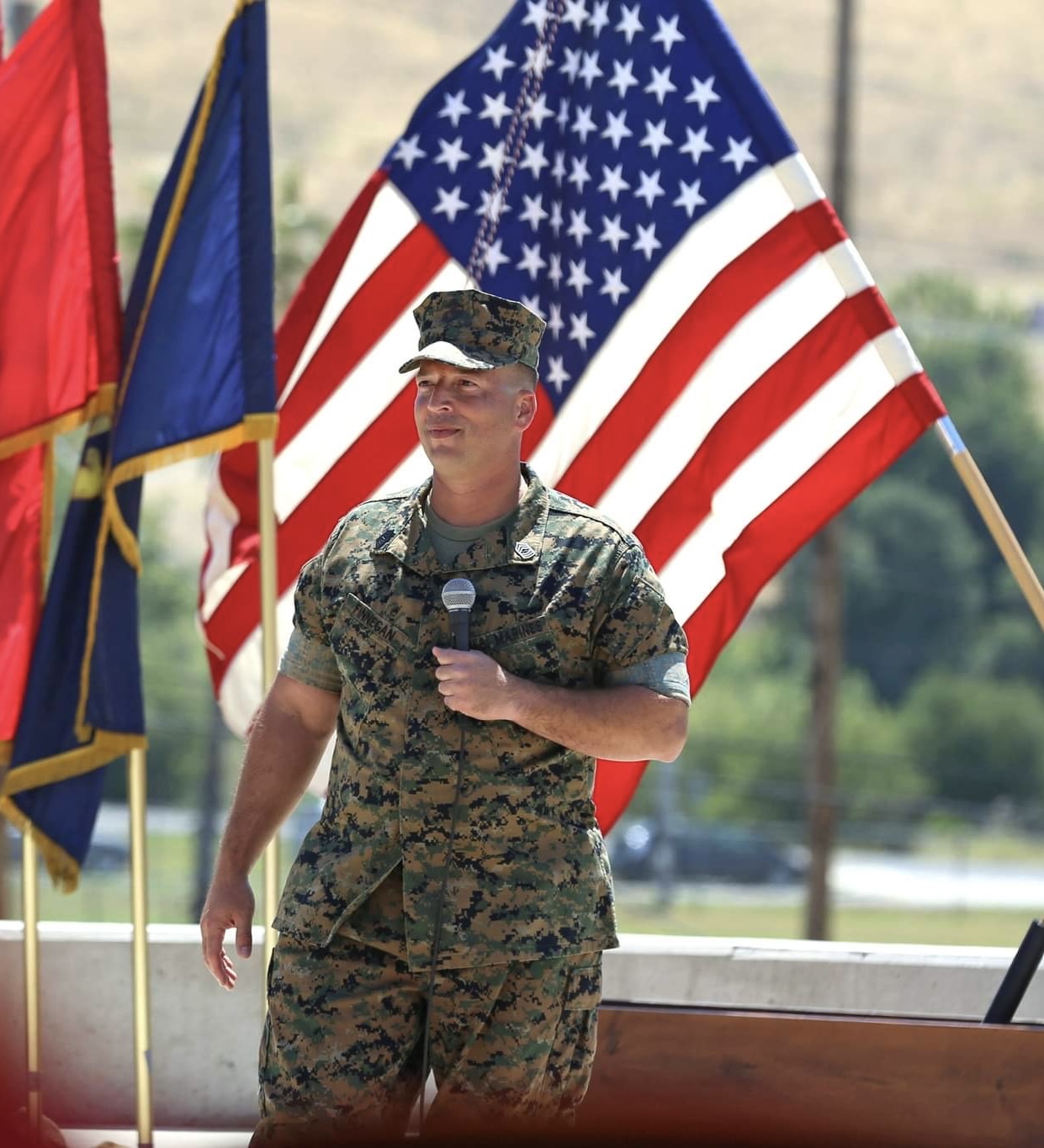
Finnegan presented at the International Lineman’s Rodeo Safety Conference in 2025.
Last year, a coworker encouraged me to step outside my comfort zone and present at the International Lineman’s Rodeo Safety Conference. With his encouragement and the support of the team at Sturgeon Electric California, I had the opportunity to speak about the similarities between military service and the power utility industry, particularly around leadership, teamwork, and culture. The presentation was very positively received, and the experience gave me the opportunity to meet and speak with linemen and other professionals from across the trade. It was a great example of how mentorship can push you toward new challenges, create opportunities, and help you grow professionally.
We all challenge each other in special ways. I don’t think Raul [Guardado, Group Vice President] would accept it any other way. We always promote having a questioning attitude. If there are doubts, ask questions and get the right answer. Those little mentorship moments pop up all the time around here.
You are heavily involved with the MYR Group veteran community. What made you start to take on those responsibilities and roles?
I support because someone supported me.
In 2021, when I was getting ready to leave the Marine Corps, I didn’t really know what I was going to do. I had a mentor who pointed me in the direction of SkillBridge, so between his mentorship and landing in SkillBridge, it placed me on the path I’m on today. Now if I have an opportunity to help fellow veterans get into this trade and be successful as well, I’m going to take it.
What is the Veteran Employee Resource Group (VERG) and how does it support our employees?
The Veteran Employee Resource Group is a collection of not only just veterans, but people wanting to support veterans. When veterans come to work for us, we don’t want them to forget their ties to the veteran community. Our members want to support the veterans getting involved in this trade. So that’s what we’re trying to do- connect our veteran employees and potential veteran new hires to the support we have to offer.
What are some skills that you developed during your time in the Marine Corps that you now use today?
Oh man, there’s so many.
The Marine Corps is kind of a melting pot of society. People come from all across the United States, and we learn to work together. I’ve learned that it’s important to deal with every situation and every person a little bit differently.
This leads to the ability to react and communicate throughout the chain of command. One day you could be talking to a lieutenant colonel and the next day you could be talking to a private. The same can be said in my job now. One day I could be talking to our group vice president, and tomorrow I’m talking to an apprentice out in the field, mentoring him along the way. So that ability to talk up and down the chain of command is another tool that we learn at a young age through the military.
What are some things you appreciate about your team and Sturgeon California?
We share the mentality that we’re here to support our crews, but we also want to be first in class when it comes to safety; how we do it is through leadership and culture.
I am surrounded by experience, and we come together to find the best solutions as a team. We consistently communicate. When things get accomplished, we circle back with each other. Despite being spread across 5 states, my safety specialists and I still can communicate and work through any issues together.
Our true success comes down to teamwork.
We’re also communicative with the field. If they need something, we want them to bring it to us and we’re going to run it to ground. We take their feedback to leadership, and most of the time we’re aligned. Our superintendent will get involved making sure it gets delivered to the guys or we’ll come up with a work practice that eliminates their concern so that we can get the job done safely.
Our true success comes down to teamwork. There’s a difference here compared to some of the other contractors I’ve worked at. We really are on the same team here.